Budgerigar
Small in size but big in personality, Budgerigars (or “Budgies” for short) are the most popular pet bird in the world, and for good reason. These colorful, playful, and intelligent little parrots are excellent companions for first-time bird keepers, families, and apartment dwellers alike.
Origins and Natural Habitat
Budgerigars (Melopsittacus undulatus) are native to the arid and semi-arid regions of continental Australia. They are highly nomadic flock birds, traveling in vast groups across the outback in search of food and water. This flock mentality is deep-seated in their nature, making them incredibly social creatures that thrive on companionship.
Appearance
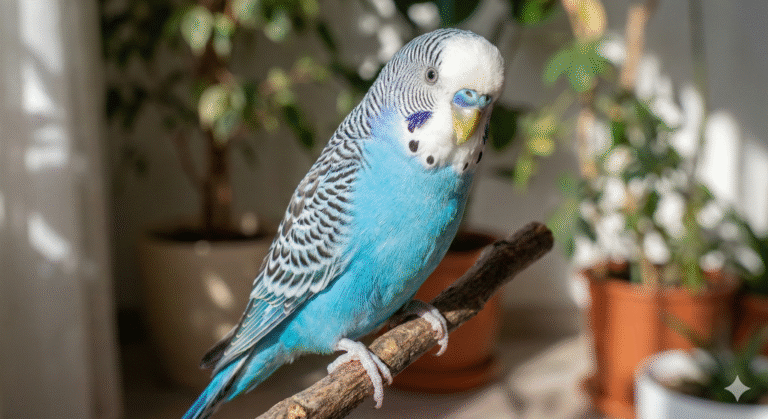
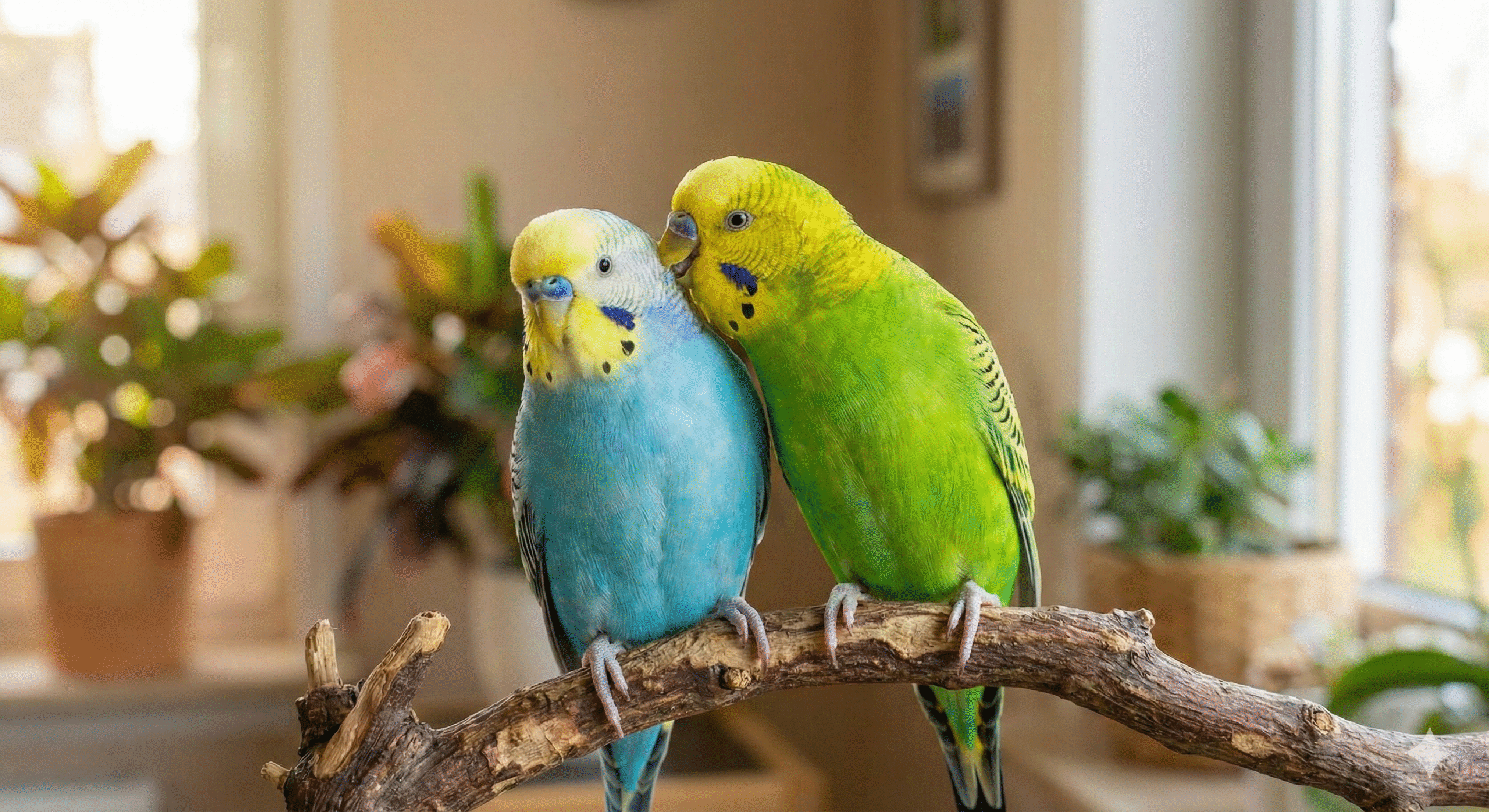
In the wild, Budgies are predominantly green and yellow with black scalloped markings on their nape, back, and wings, which helps them camouflage in the grasses. However, centuries of selective breeding in captivity have produced a stunning array of color mutations, including blues, whites, violets, and greys. They are petite birds, typically measuring around 7–8 inches in length from beak to tail tip. You can often tell their sex by the color of their cere (the fleshy area above their beak): typically bright blue for adult males and brown or crusty for adult females in breeding condition.
Personality and Behavior
Budgies are beloved for their happy-go-lucky and active nature. They are incredibly playful, love toys, and spend much of their day chattering, whistling, and exploring. Despite their small size, they are very smart and can be taught to mimic speech and sounds with patience. Because they are flock animals, they are happiest when kept in pairs or groups. If kept singly, they require a significant amount of daily interaction and attention from their human “flock” to prevent loneliness and boredom.
Enclosure and Habitat Needs
While they are small, Budgies are very active and need plenty of space to move and fly.
- Cage Size: Get the largest cage you can afford and fit. Length is more important than height to allow for horizontal flight. A minimum for a single pair would be around 24″ long x 18″ wide x 24″ high, but bigger is always better.
- Bar Spacing: Must be no more than 1/2 inch to prevent escape or injury.
- Perches: Provide a variety of perch diameters and textures (like natural wood branches) to keep their feet healthy.
- Toys: An assortment of toys for chewing, foraging, and mental stimulation is essential to keep them entertained.
Diet and Feeding
A common misconception is that Budgies can survive on seeds alone. A seed-only diet is high in fat and lacks essential nutrients, leading to health problems and a shorter lifespan. A healthy diet should consist of:
- High-quality formulated pellets (about 60-70% of their diet).
- A variety of fresh vegetables (leafy greens, carrots, broccoli) and some fruits.
- A small amount of seed mix as a treat.
- Fresh water and a cuttlebone for calcium should always be available.
Health and Lifespan
For such a small bird, Budgies have an impressive lifespan, often living 10–15 years, sometimes even longer with excellent care. Common health issues can include mites, respiratory infections, and tumors. Signs of illness in birds are often subtle, such as sitting fluffed up at the bottom of the cage, lethargy, or changes in droppings. A veterinarian who specializes in birds is recommended for check-ups.
Is the Budgerigar Right for You?
If you want a cheerful, interactive, and relatively low-maintenance feathered friend, the Budgie is a wonderful choice. They bring life and song into a home without the daunting size or noise level of larger parrots. Just be prepared for some daily chatter, a bit of seed mess, and a decade or more of loyal companionship.