Corn Snake
If the idea of a pet snake intrigues you but you are worried about aggression or complex care, the Corn Snake is the perfect answer. Known for their reluctance to bite, manageable size, and stunning array of colors, they are widely regarded as the best snake for beginners.
Origins and Natural Habitat
Corn Snakes (Pantherophis guttatus) are native to the southeastern United States. They get their name because they were often found near grain stores and cornfields, where they hunted the mice that ate the corn. In the wild, they are semi-arboreal, meaning they spend time both on the ground and climbing trees or exploring abandoned buildings.
Appearance
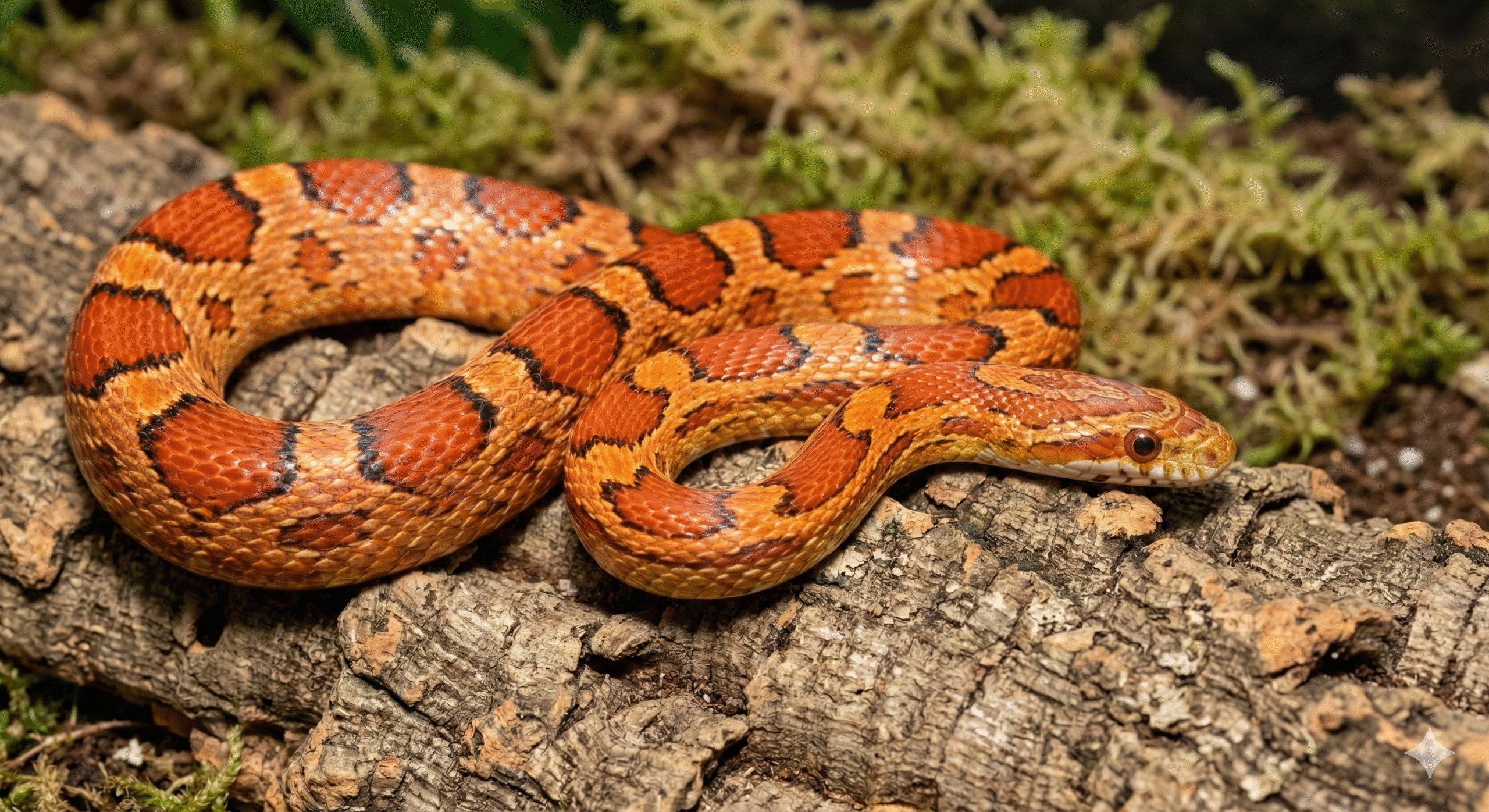
Corn Snakes are slender and typically grow to a manageable length of 3–5 feet (about 1 to 1.5 meters). They are not heavy-bodied like pythons. While the “classic” wild type features orange/red saddles on a grey or tan body, breeders have created hundreds of “morphs.” You can find them in snow white, charcoal grey, lavender, and even stripeless or patternless varieties. Their belly often has a distinctive black-and-white checkerboard pattern.
Personality and Behavior
Corn Snakes are famous for their gentle disposition. They are generally very calm and tolerate handling well, rarely striking once they are used to their owner. They are active snakes, especially at dawn and dusk. Unlike a “pet rock” reptile that sits still all day, a Corn Snake will often explore its enclosure, making them fun to watch.
Enclosure and Habitat Needs
Because they are escape artists, a secure enclosure is the #1 priority.
- Tank Size: An adult Corn Snake needs at least a 40-gallon breeder tank (approx. 36x18x16 inches) or a 4×2 foot enclosure to stretch out.
- Heating: They need a temperature gradient: a warm side of about 85°F (29°C) and a cool side around 75°F (24°C). Under-tank heat mats or overhead heat bulbs can be used.
- Hides: Provide at least two snug hides (one on the warm side, one on the cool side) so they feel secure.
- Climbing: Since they like to climb, adding branches and vines is excellent for their exercise.
Diet and Feeding
Corn Snakes are carnivores and eat a diet of rodents. In captivity, they are fed frozen-thawed mice (warmed up to body temperature).
- Frequency: Hatchlings eat once every 5-7 days, while adults typically eat once every 10-14 days.
- This makes them incredibly low-maintenance compared to pets that need daily feeding. Always provide a bowl of fresh water large enough for them to soak in if they choose.
Health and Lifespan
These are hardy animals. With proper care, a Corn Snake can easily live 15–20 years. Common health issues usually stem from poor husbandry (temperatures too low or dirty cages) leading to respiratory infections or shedding problems (“stuck shed”). Keeping humidity around 40-50% and providing a humid hide when they are shedding prevents most skin issues.
Is the Corn Snake Right for You?
If you want a fascinating, beautiful, and quiet pet that requires minimal daily maintenance and is safe to handle, the Corn Snake is an ideal choice. They are a fantastic entry point into the world of reptile keeping.