Bearded Dragon
If you want a reptile that actually seems to enjoy hanging out with you, look no further than the Bearded Dragon. Known for their head-bobbing, arm-waving, and incredibly docile nature, “Beardies” are widely considered the best pet lizard for families and beginners who want an interactive friend.
Origins and Natural Habitat
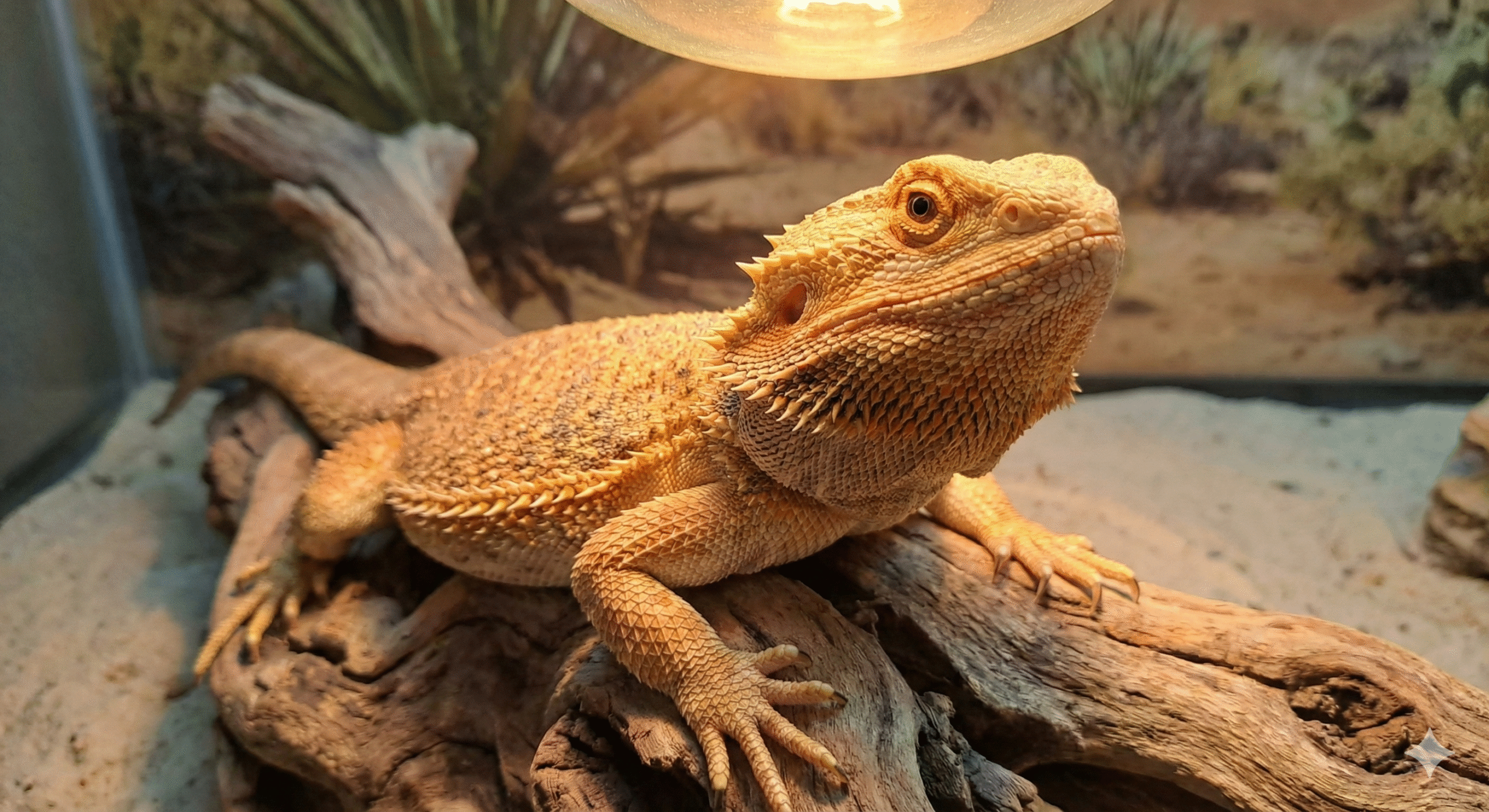
Bearded Dragons (genus Pogona) are native to the woodlands, scrublands, and deserts of Australia. Unlike the nocturnal Leopard Gecko, Bearded Dragons are diurnal, meaning they are awake and active during the day, just like us. In the wild, they spend their mornings basking on rocks to warm up before hunting for food.
Appearance
They get their name from the spiny scales around their neck, which they can puff out to look like a beard when they feel threatened or excited (though pet Beardies rarely do this in aggression). They have a flat, broad body and can grow up to 18–24 inches long, including their tail. While their natural colors are sandy browns and greys, breeders have created “morphs” in stunning shades of citrus orange, red, and even pure white.
Personality and Behavior
Bearded Dragons are famous for being calm and hardy. They are often content to sit on their owner’s shoulder while they watch TV or walk around the house. They have unique social behaviors, such as “arm waving” (a sign of submission) and “head bobbing” (a sign of dominance). They are very responsive to food and will often run to the glass when they see you coming with insects.
Enclosure and Habitat Needs
Beardies get quite large, so they need a substantial amount of space.
- Tank Size: An adult needs at least a 120-gallon tank (4x2x2 feet). Front-opening enclosures are best.
- Lighting: This is critical. They require a high-output UVB tube light (to prevent bone disease) and a bright basking bulb.
- Temperature: They need a temperature gradient with a basking spot of 100–105°F (38–40°C) and a cool side around 80°F (26°C).
- Substrate: Tile, paper towels, or a sand/soil mix (for older dragons) work well.
Diet and Feeding
Bearded Dragons are omnivores. Their diet changes as they age:
- Babies: mostly bugs (crickets, dubia roaches) + some greens.
- Adults: mostly fresh vegetables (collard greens, mustard greens, squash) + bugs a few times a week. They also need calcium powder dusted on their food to keep their bones strong.
Health and Lifespan
A healthy Bearded Dragon can live 10–15 years. The most common health issue is Metabolic Bone Disease (MBD), caused by lack of calcium or bad lighting, which is entirely preventable with the right setup. Impaction (blockage in the gut) can occur if they eat loose sand or prey that is too large.
Is the Bearded Dragon Right for You?
If you have the space for a large tank and the budget for proper lighting, a Bearded Dragon is an incredibly rewarding pet. They are sturdy, rarely bite, and have enough personality to win over even people who think they don’t like reptiles.