Budgerigar (Budgie)
Don’t let their small size fool you. The Budgerigar, commonly known as the “Budgie” or “Parakeet” (in the US), packs a massive personality into a tiny body. They are famous for being the best talkers in the avian world, often outperforming much larger parrots in vocabulary size and clarity.
Origins and Natural History
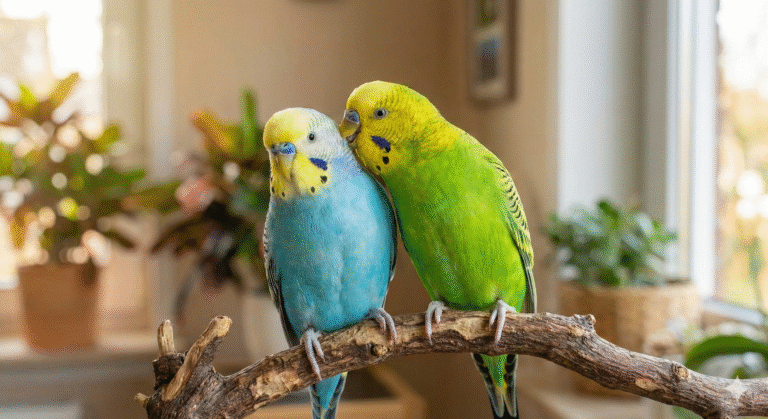
Budgies (Melopsittacus undulatus) are native to the dry interior of Australia. In the wild, they are nomadic, traveling in massive flocks of thousands to find water and seeds. The wild budgie is always green and yellow to camouflage with the grass. The blues, whites, and greys we see in captivity are color mutations developed by breeders over the last 150 years.
Appearance
They are small parrots, usually measuring 7–8 inches from head to tail.
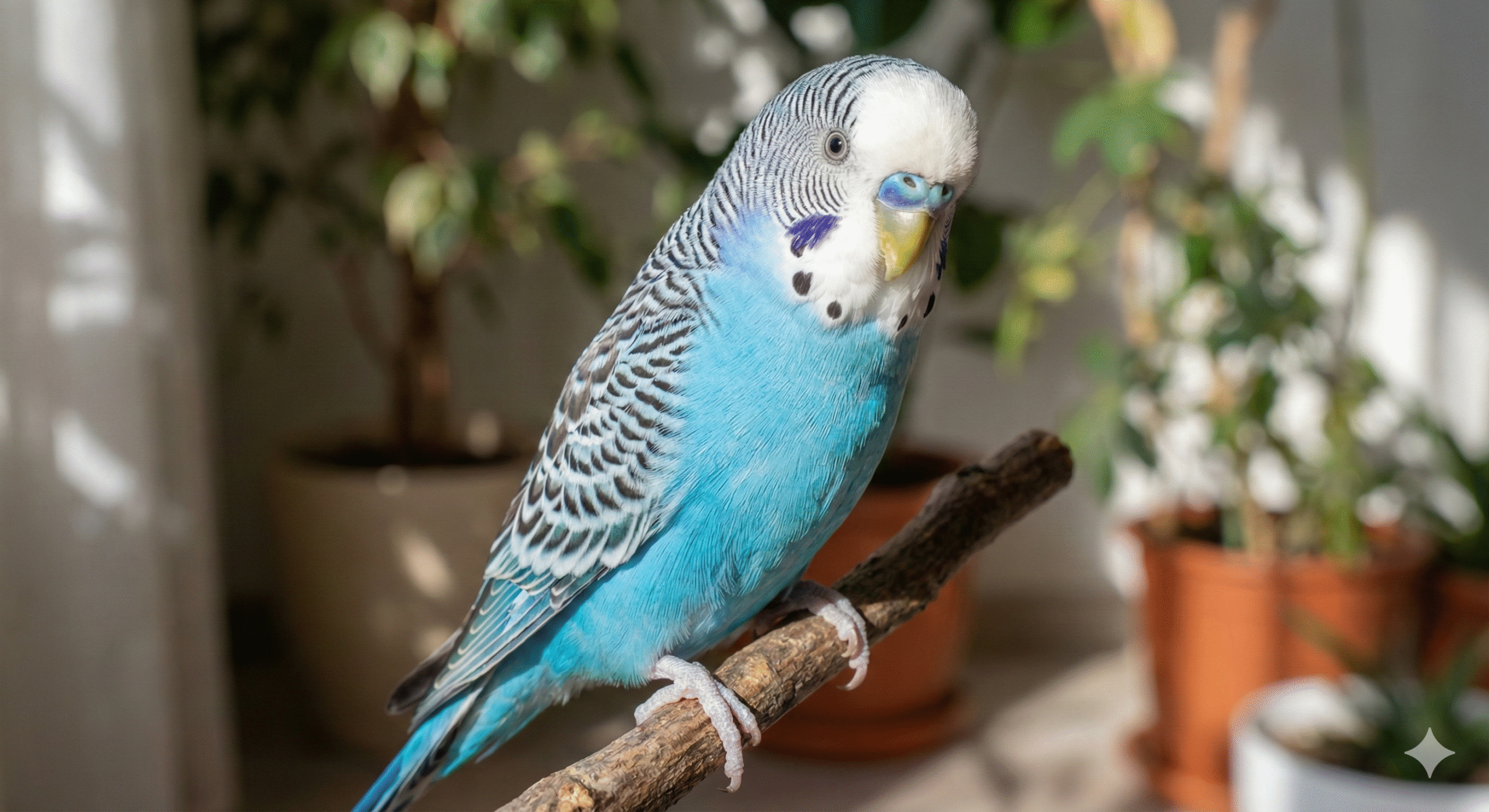
- Cere: You can often tell the gender by the “cere” (the bumpy flesh above the beak). In adult “wild type” or blue varieties, males typically have a bright royal blue cere, while females have a white, pale blue, or crusty brown cere.
- Markings: They have distinctive black “wave” patterns (undulations) on their wings and the back of their head, which gives them their scientific name.
Personality and Behavior
Budgies are extremely social, high-energy, and playful. Because they live in huge flocks in the wild, they are hardwired to be social. If kept as a single bird, you become their flock, and they require hours of attention daily. They are incredibly smart. With patience, they can learn to perform tricks, fly to your hand, and mimic human speech clearly. Males are generally considered better talkers than females.
Living Environment and Needs
A common mistake is putting a budgie in a tiny “starter” cage. They are active flyers.
- Cage Size: The minimum for a single bird is 18x18x18 inches, but a wider “flight cage” (30 inches long) is much better to allow horizontal flight.
- Toys: They are destruction machines in miniature! They need shreddable toys (paper, soft wood), bells, and foraging toys to keep their active brains busy.
- Company: If you work long hours, it is highly recommended to keep two budgies together so they don’t get lonely.
Diet and Feeding
The old “seed-only” diet is outdated and often leads to fatty liver disease and a shortened lifespan. A modern, healthy diet consists of:
- Pellets: 60-70% of their diet should be high-quality mini-pellets.
- Vegetables: Daily “chop” including leafy greens, peppers, carrots, and herbs.
- Seeds: Should only be 10-20% of the diet, used mainly as treats or training rewards.
Health and Lifespan
While wild budgies live about 5 years, a well-cared-for pet budgie can live 10–15 years. They are masters at hiding illness (a survival instinct). Common issues include tumors, goiter (often from iodine deficiency in all-seed diets), and obesity.
Is the Budgie Right for You?
If you want a smart, interactive parrot that can learn to talk but fits in a smaller space than a macaw, the Budgie is the champion. They are cheerful, chatty, and full of life—just be prepared for a bit of noise and a lot of vacuuming up seed hulls!