Cockatiel
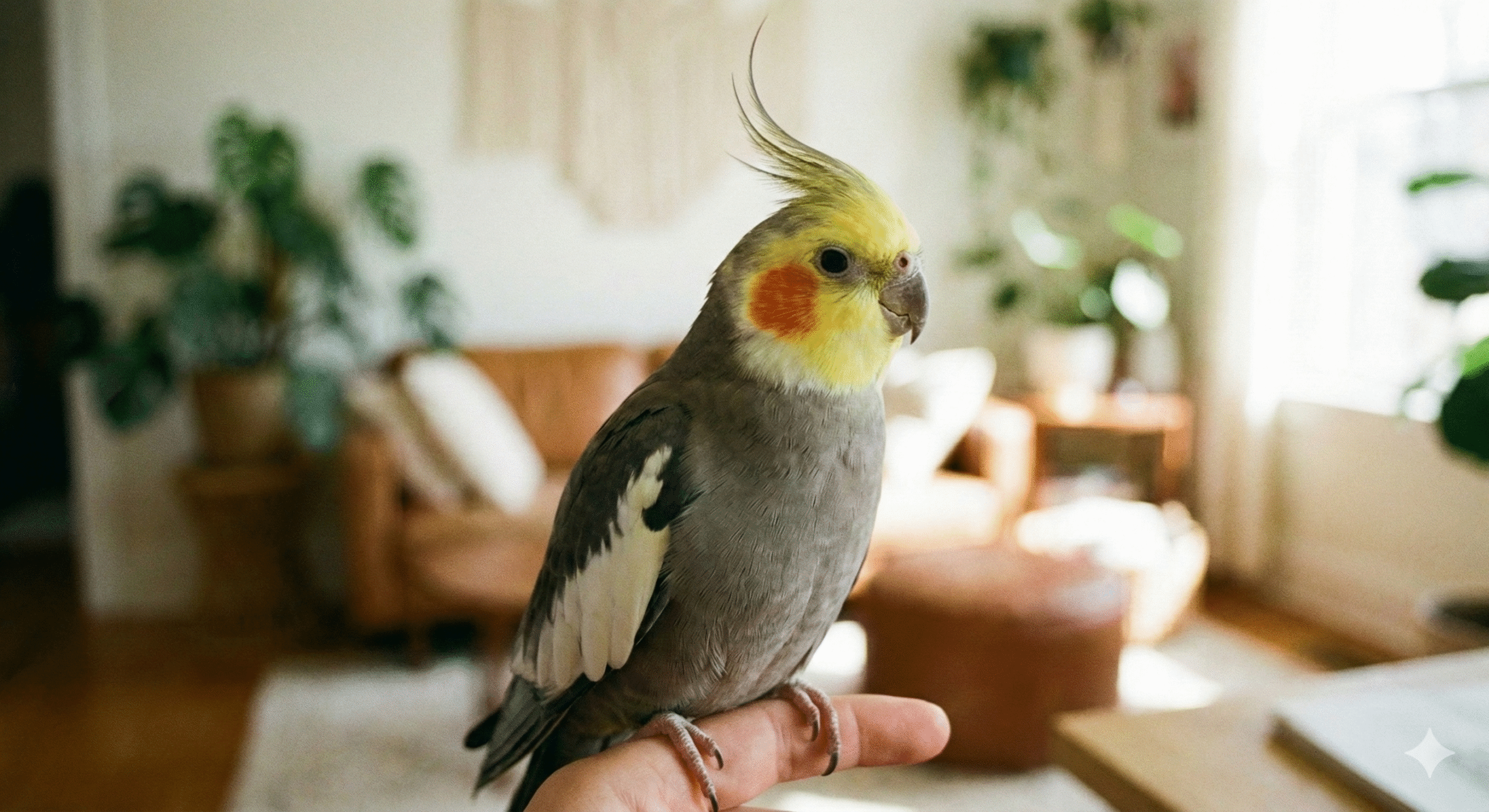
Famous for their jaunty crests, bright orange cheek patches, and impressive whistling abilities, Cockatiels are the second most popular pet bird in the world, right after the Budgie. They are beloved for their gentle and affectionate nature, making them wonderful companions for families and individuals alike.
Origins and Natural Habitat
Cockatiels (Nymphicus hollandicus) are native to the Australian mainland. They are widely distributed across the arid and semi-arid country, often found in pairs or small flocks near bodies of water. They are the smallest member of the cockatoo family, sharing many traits with their larger cousins, such as the expressive erectile crest.
Appearance
The classic “wild type” Cockatiel has a grey body with a bright yellow head and crest, and distinct orange “ear” patches. Females are generally duller in color, with a greyer head and barred markings on their tail feathers. Like other popular pets, breeders have developed many color mutations, including Lutino (all yellow and white with red eyes), Pied (patches of white and grey), and Pearl (laced or spotted feathers). They are medium-sized birds, measuring about 12–13 inches from beak to tail tip.
Personality and Behavior
Cockatiels are prized for their sweet and docile temperament. While females are often quiet and cuddly, males are known for being vocal and outgoing. They are talented whistlers and can learn to mimic tunes, phone ringtones, and even say a few simple words. Their crest is a great mood indicator: up when excited or curious, flat when angry or defensive, and relaxed when calm. They are social birds and thrive on daily interaction with their human flock.
Enclosure and Habitat Needs
Cockatiels are active flyers and need a spacious cage to move around and spread their wings.
- Cage Size: A minimum size of 24″ long x 24″ wide x 24″ high is recommended for a single bird, with bar spacing no more than 3/4 inch. A larger flight cage is always better.
- Perches: Provide a variety of natural wood perches of different diameters to keep their feet healthy and exercise them.
- Toys: They are intelligent and need plenty of toys to shred, chew, and forage with to prevent boredom. Rotating toys weekly keeps things interesting.
- Time Out of Cage: They need several hours of supervised time outside their cage each day to fly, socialize, and explore.
Diet and Feeding
A common mistake is feeding an all-seed diet, which can lead to obesity and malnutrition. A healthy diet should consist of:
- A high-quality formulated pellet mix (about 60-70% of their diet).
- A daily variety of fresh vegetables (leafy greens, broccoli, carrots) and some fruits.
- A small amount of seed mix as a treat.
- Fresh water and a cuttlebone for calcium should always be available.
Health and Lifespan
Cockatiels are generally hardy birds and can live for a long time, often reaching 15–20 years or even older with excellent care. Common health issues can include respiratory infections, nutritional deficiencies from a poor diet, and reproductive issues in egg-laying females. Regular check-ups with an avian vet are crucial.
Is the Cockatiel Right for You?
If you want a bird that is larger and more interactive than a budgie but not as demanding or loud as a large parrot, the Cockatiel is a perfect middle ground. Their cheerful whistling, affectionate cuddles, and expressive personalities make them a joy to have in the home.