Guppy
Active, hardy, and available in an almost endless rainbow of colors, the Guppy is one of the most popular tropical fish in the world. They are the perfect starting point for new aquarists looking to create a lively “community tank” with multiple fish living together peacefully.
Origins and Natural History
Guppies (Poecilia reticulata) are native to fresh and brackish waters in Northeast South America, particularly in Venezuela, Barbados, and Trinidad. They were originally introduced to many parts of the world as a natural mosquito control method because of their appetite for mosquito larvae. Today, they are a staple in the aquarium hobby due to decades of selective breeding for color and tail shapes.
Appearance
Guppies are sexually dimorphic, meaning males and females look very different.
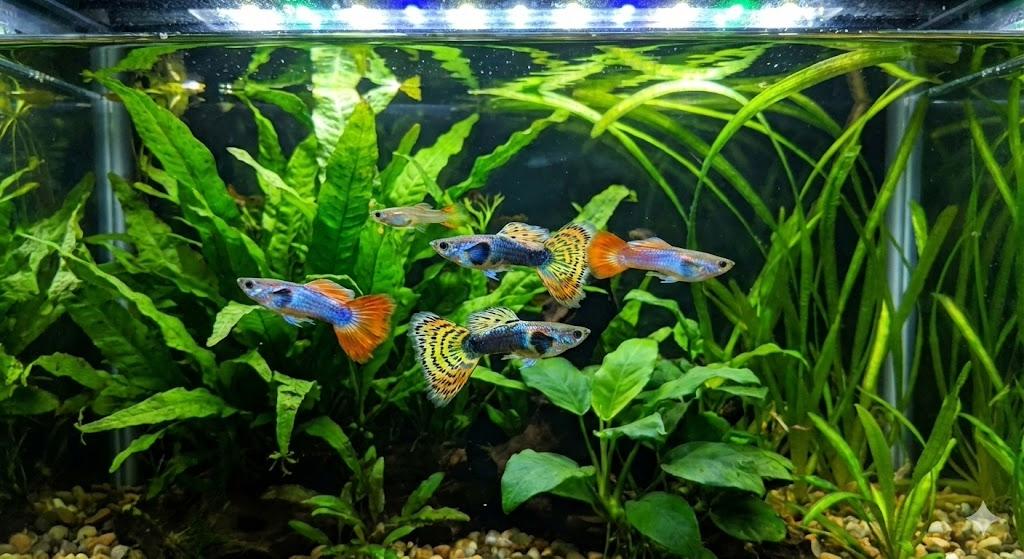
- Males: Smaller (about 1.5 inches), with incredibly brightly colored bodies and large, flowing tails in patterns like “cobra,” “mosaic,” or solid neon colors.
- Females: Larger (up to 2.5 inches) and rounder, typically with drab grey or silver bodies, though some modern strains have colorful tails as well.
Personality and Behavior
Guppies are peaceful, active fish that spend most of their time swimming near the top of the tank. They are constantly on the move, searching for food and interacting with each other. They are social fish and get stressed if kept alone. They should be kept in groups of at least a trio (ideally one male to two females to prevent males from harassing a single female too much). They are excellent “dither fish” that encourage shyer species to come out of hiding.
Enclosure and Habitat Needs
Because they are small but active, they need room to swim.
- Tank Size: A minimum of a 10-gallon tank is recommended for a small group.
- Water Temperature: As tropical fish, they require a heater to keep the water between 74–82°F (23–28°C).
- Filtration: A gentle sponge filter or hang-on-back filter is necessary to keep the water clean.
- Decor: They appreciate live or silk plants to swim through and hide in, especially for females needing a break from males.
Diet and Feeding
Guppies are unfussy omnivores. In the wild, they eat algae and insect larvae. In an aquarium, they thrive on a diet of high-quality tropical flake food, supplemented with treats like frozen bloodworms, brine shrimp, or even blanched vegetables like zucchini. Because they have small stomachs, feeding tiny amounts once or twice a day is better than one large feeding.
Health and Lifespan
A well-cared-for Guppy typically lives 2–3 years. They are known as “livebearers,” meaning they give birth to free-swimming fry instead of laying eggs. If you keep males and females together, you will have baby fish rapidly. Common health issues include “Ich” (white spot disease) and fin rot, usually caused by poor water quality or stress.
Is the Guppy Right for You?
If you want a tank full of constant movement and brilliant color without needing a huge setup, Guppies are an ideal choice. They are inexpensive, easy to care for, and their active nature brings immediate life to any room.