Hermann’s Tortoise
For those fascinated by prehistoric-looking creatures but who want a pet that is docile and manageable, the Hermann’s Tortoise is an excellent choice. These small, personable tortoises are one of the most popular species kept as pets worldwide due to their hardiness and active nature.
Origins and Natural History
Hermann’s Tortoises (Testudo hermanni) are native to the Mediterranean region of Southern Europe. Their natural habitat includes evergreen forests, oak forests, and arid, rocky hillsides with scrubby vegetation. They are adapted to a climate with hot, dry summers and cool, wet winters, during which they naturally hibernate.
Appearance
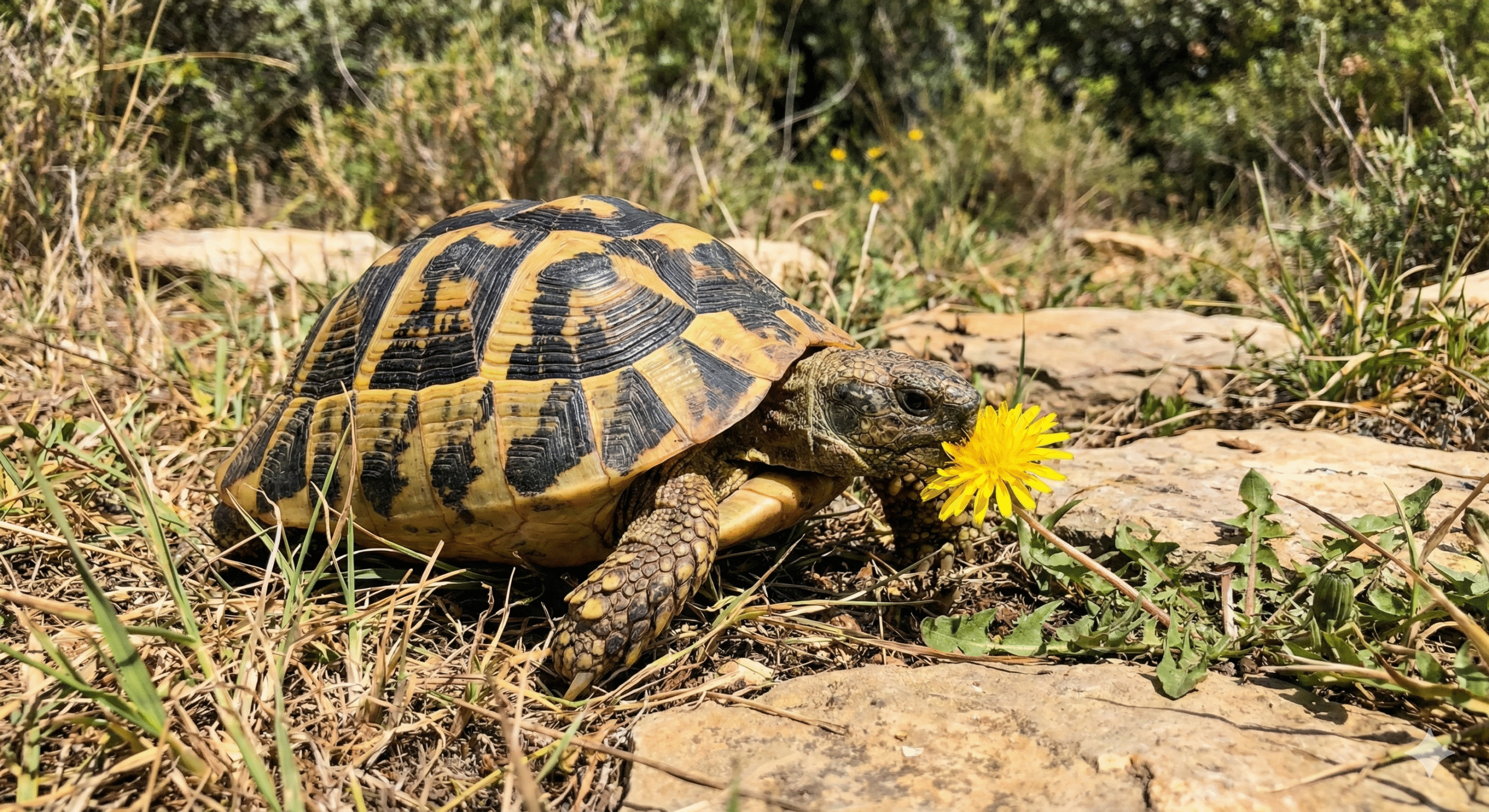
They are a small to medium-sized tortoise, typically growing to between 5 and 8 inches (13-20 cm) in length. Their most distinctive feature is their beautiful, high-domed shell (carapace), which is patterned with bold black markings on a yellow or orange background. They have strong, scaly legs adapted for digging and climbing over rocks. A key identifier is a horny claw-like tip at the end of their tail.
Personality and Behavior
Unlike many reptiles that spend all day hiding, Hermann’s Tortoises are active, inquisitive, and diurnal (awake during the day). They spend hours patrolling their enclosure, foraging for food, and basking in the sun. They are generally docile and tolerate gentle handling well, rarely biting. Many owners find they develop distinct personalities and will learn to recognize their caregivers, often coming over to see if you have a treat.
Enclosure and Habitat Needs
While small, they are active wanderers and need plenty of space. An outdoor enclosure in a warm climate is ideal, but a large indoor setup can also work.
- Enclosure Size: An adult needs a minimum floor space of 8 square feet (e.g., a 4ft x 2ft tortoise table). Aquarium tanks are generally poor choices as they don’t offer enough floor space and have poor ventilation.
- Lighting & Heat: They require a high-quality UVB light to metabolize calcium and a basking lamp that creates a “hot spot” of about 90-95°F (32-35°C).
- Substrate: A deep layer of a soil/sand mix or cypress mulch allows for natural digging behavior.
Diet and Feeding
They are strict herbivores. In the wild, they graze on a huge variety of weeds and flowers. Their captive diet should be high in fiber and low in protein and fruit. The best foods are leafy greens and weeds like dandelions, clover, plantain, collard greens, and mustard greens. A calcium supplement should be dusted on their food a few times a week.
Health and Lifespan
This is a long-term commitment: a well-cared-for Hermann’s Tortoise can live for 50 to 70+ years. Common health issues include metabolic bone disease from lack of calcium/UVB, and respiratory infections from cold, damp conditions. Pyramiding (lumpy shell growth) is caused by a poor diet and lack of humidity.
Is the Hermann’s Tortoise Right for You?
If you have the space for a large enclosure and are ready for a pet that could be in your will, the Hermann’s Tortoise is a wonderful companion. They are fascinating to watch, gentle, and provide a unique connection to the natural world right in your home.